How to Determine Anion Gap in a Metabolic Alkalosis State
What Is the Anion Gap?
The anion gap serves as a calculated value that helps doctors read blood chemistry and detect hidden acid-base problems. It contrasts the main measured electrolytes in the serum, especially sodium and chloride, with bicarbonate to estimate the amount of unmeasured ions in the blood. In practice, an anion gap calculator is often used to speed up this step and reduce arithmetic errors.
While the anion gap is commonly discussed in the setting of acidosis, it can still be useful in metabolic alkalosis. That is because the value may reveal an additional acid-base disorder, indicate electrolyte abnormalities, or reflect changes in albumin that change the apparent gap. Understanding this number is part of a larger acid-base balance assessment, not just a single lab review.
At its core, the anion gap is based on serum electrolytes measured in a standard electrolyte panel or serum chemistry panel. The result is not a direct measurement. Instead, it is a clinical estimate used to support interpret lab values and guide the diagnostic approach.
Reasons why the Anion Gap Is Useful in alkalosis
Metabolic alkalosis typically means the body has an excess of base or not enough acid, often shown by an elevated bicarbonate level. On its own, this can happen from retching, use of diuretics, or chloride loss. However, the anion gap matters because the presence of alkalosis does not exclude another disorder at the same time. A patient may have a mixed acid-base disorder where metabolic alkalosis coexists with a elevated-gap process.
For this reason the anion gap is useful in metabolic alkalosis diagnosis. It helps determine whether the lab pattern is purely alkalotic or whether an additional process such as elevated lactate acidosis or diabetic ketoacidosis is being masked. The result can also be changed by low albumin, which can make a serious high-gap problem look mistakenly normal.
Put simply, the anion gap is not only about spotting acidosis. It is a way to judge whether the chemistry pattern makes sense. When blood chemistry suggests alkalosis, the anion gap can clarify whether there is a hidden mixed disorder, whether there is significant chloride depletion, or whether the apparent picture is altered by protein changes.
How to Determine the Anion Gap One Step at a Time
To calculate anion gap, you use the anion gap formula with the main measured serum electrolytes. In most cases:
Anion gap = serum sodium − (serum chloride + serum bicarbonate)
The calculation uses serum sodium, serum chloride, and serum bicarbonate. These values typically come from an electrolyte panel or full blood chemistry results. Many clinicians use an Anion Gap Calculator to easily confirm the math and pay attention to the clinical interpretation.
In sequence the process is simple:
- Identify the serum sodium value.
- Find the serum chloride value.
- Find the serum bicarbonate value.
- Sum chloride and bicarbonate together.
- Subtract that sum from sodium.
For example, if sodium is 140, chloride is 100, and bicarbonate is 30, then the anion gap is 140 − (100 + 30) = 10. This result would fall within the expected reference range in many labs. Even in a patient with metabolic alkalosis, that typical result may still be clinically important, because it can suggest no additional unmeasured acid load is present.
Classic Formula and Typical Range
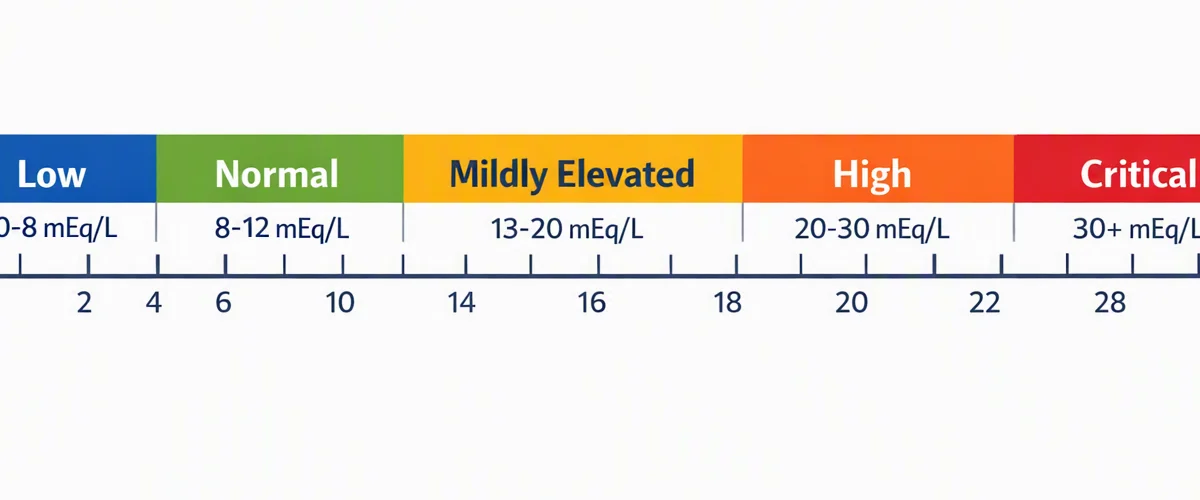
The classic anion gap formula is most often reported in milliequivalents per liter and is interpreted against a lab-specific reference range. A common normal anion gap is roughly 8 to 12 mEq/L, though some laboratories use slightly different cutoffs depending on their methods and instrumentation.
The exact number can vary with analyzer technology, which is why the lab’s own range matters more than a universal cutoff. That said, an elevated anion gap generally raises concern for unmeasured acids, while a low value often suggests reduced unmeasured anions, especially albumin deficiency or measurement issues.
Because albumin is the main undetected anion in plasma, it has a large effect on the result. A patient with usual electrolytes but low albumin may appear to have a normal or low anion gap even when another process is present. For this reason, the calculator result should under no circumstances be read alone.
Albumin-Corrected Anion Gap
Hypoalbuminemia is among the of the most significant reasons to adjust the number. Since albumin is negatively charged, a decrease in serum albumin lowers the measured anion gap. If you do not account for this, a genuine high anion gap process can be missed.
An albumin correction is used to estimate the corrected anion gap. A frequently used approach is to add about 2.5 mEq/L to the anion gap for each 1 g/dL decrease in albumin below a normal value of 4.0 g/dL. The exact formula may vary by institution, but the principle is the same: low albumin lowers the apparent gap, so the corrected value gives a truer picture.
For example, if the anion gap is 10 and albumin is 2.0 g/dL, the correction would lift the apparent gap by about 5. The corrected result may then move from typical into a range that better reflects the patient’s true acid-base status. This is especially important when trying to interpret lab values in very sick patients or anyone with severe electrolyte imbalance.
How Metabolic Alkalosis Changes the interpretation
Metabolic alkalosis modifies the reading of the anion gap because bicarbonate is part of the formula. When bicarbonate increases, the computed gap may drop if sodium and chloride stay the same. That does not always mean the patient has a low-gap disorder. It may simply reflect the alkalosis itself or associated shifts in electrolytes.
To make sense of the result, it helps to look at the full arterial blood gas analysis and chemistry profile. The arterial blood gas shows pH, pCO2, and calculated bicarbonate, while the electrolyte panel shows measured serum electrolytes. In combination they support a more complete clinical assessment of the acid-base picture.
The anion gap is especially useful when the alkaline process might be masking an acid problem. For instance, a patient can have vomiting-related alkalosis and still have a concurrent lactic acidosis. In that case, the pH may appear less abnormal than expected because the disorders offset each other. The gap helps identify the hidden component.
Two patterns matter most:
- A chloride-responsive alkalosis, often linked to volume depletion and loss of chloride.
- Chloride-resistant alkalosis, often related to mineralocorticoid excess or other causes that do not correct simply with chloride replacement.
These patterns are part of the broader diagnostic approach, but they do not replace the anion gap. Rather, they work alongside it. In a patient with alkalosis, a careful review of base excess, bicarbonate level, and serum electrolytes can reveal whether the picture is straightforward or mixed.
The base excess can also help estimate the degree of metabolic disturbance. When combined with serum chemistry and arterial blood gas results, it can support the evaluation of loss of chloride or a possible hidden acid load.
Common Causes of an Raised Anion Gap With Alkalosis
An increased anion gap value in the setting of metabolic alkalosis usually indicates a combined acid-base disturbance. This means the patient has more than one process occurring simultaneously. The alkalosis may elevate bicarbonate, while another disorder introduces unmeasured acids and widens the gap.
These causes include:
- Lactic acid buildup, which can occur with poor tissue perfusion, sepsis, or major physical stress.
- Ketotic acidosis, including insulin-related, alcoholic, or starvation-related forms.
- Impaired kidney function, where retained acids raise the anion gap.
These conditions can coexist with emesis, diuretic use, or other causes of metabolic alkalosis. For example, a patient may have alkalosis from vomiting but also develop lactic acidosis from dehydration or shock. Another patient may have alkalosis from excess bicarbonate intake and still show ketoacidosis from poor insulin control. The combination produces a mixed picture that can be missed if only the pH is reviewed.
That is why an anion gap calculator should be used as part of a full diagnostic approach, not as a single answer. The key question is not only whether the alkalosis is present, but whether an hidden high-gap cause is hidden underneath it.
How to Use an Anion Gap Calculator Properly
An anion gap calculator works best when the lab values are correct and the input units match. Most interpretation errors come from using values from different reports, mixing whole blood and serum measurements, or entering numbers without checking the measurement units. The calculator can only be as reliable as the data entered into it.
To use it well:
- Make sure that the results come from the same electrolyte panel or closely matched blood draw.
- Apply the correct serum values for sodium, chloride, and bicarbonate.
- Check the lab’s stated reference range.
- Assess the patient’s clinical interpretation in context, not just the number.
- Assess whether hypoalbuminemia is present and whether a corrected anion gap is needed.
It is also important to remember that serum chemistry may differ from arterial blood gas bicarbonate because of timing or measurement method. That is why a serum chemistry panel and arterial blood gas should be compared carefully when the diagnosis is unclear. If the two values differ meaningfully, a repeat sample may be needed potassium in anion gap debate before drawing conclusions.
A good calculator supports fast clinical interpretation, but it does not replace medical judgment. The final decision should always account for symptoms, medications, fluid status, kidney function, and the full acid-base disorder pattern.
When to Retest Labs or Obtain Further Assessment
Repeat lab testing is recommended when the finding does not align with the patient’s symptoms or when the patient’s state is shifting. A single anion gap value may fail to detect evolving disease, especially if the patient has dehydration, sepsis, kidney injury, or ongoing depletion of chloride and bicarbonate. In these scenarios, repeat testing can show whether the pattern is stable, worsening, or resolving.
Additional evaluation is also appropriate if the gap is surprisingly high or unusually normal despite concerning symptoms. A new blood gas analysis may help reconcile the arterial blood gas results with the serum chemistry panel. If there is suspicion of a hidden mixed acid-base disorder, the clinician should reconsider anion gap interpretation alongside the patient’s clinical context.
Common examples of reasons to recheck or expand the workup include:
- Persistent nausea, confusion, or shortness of breath.
- Suspected lactic acidosis, ketoacidosis, or renal failure.
- Ongoing metabolic alkalosis with unknown cause.
- Suspicion for severe electrolyte abnormalities or rapid clinical changes.
The key point is that anion gap interpretation should be interpreted with the story behind the labs. A number that looks reassuring can still mask a significant disorder, especially when albumin is low or when alkalosis and acidosis are occurring together.
Common Questions
How do you determine the anion gap in metabolic alkalosis?
Use the same anion gap formula employed in any other setting: serum sodium minus the sum of serum chloride and serum bicarbonate. In metabolic alkalosis, the bicarbonate is usually elevated, so the result may appear normal or even slightly lower unless another acid-base problem is present. The best way to determine anion anion gap in chronic kidney disease gap accurately is to use the same electrolyte panel values and then interpret the result in clinical context.
Is the anion gap usually normal in metabolic alkalosis?
Often, yes. A normal anion gap is common in pure metabolic alkalosis, especially when the cause is vomiting or chloride loss. However, a normal value does not rule out other disorders. If there is a mixed acid-base disorder, the gap may be elevated, and if albumin is low, the apparent number may be falsely reassuring.
Should you correct the anion gap for albumin?
Yes, particularly if hypoalbuminemia is present or suspected. Because albumin is a major unmeasured anion, low levels reduce the measured gap. Using an albumin correction gives a more accurate corrected anion gap and improves clinical interpretation. This is particularly helpful when trying to detect a hidden high anion gap disorder.
Is it possible for metabolic alkalosis and a high anion gap happen together?
Yes. This is a classic mixed acid-base disorder. A patient may have metabolic alkalosis from vomiting or diuretics and also have lactic acidosis, ketoacidosis, or renal failure. In that case, the alkalosis and acidosis can partially offset each other, so the arterial blood gas and serum chemistry panel must both be reviewed carefully.
What is a normal anion gap mean when bicarbonate is high?
A normal gap with a high bicarbonate level often suggests isolated metabolic alkalosis without a hidden high-gap process. Still, the result should be checked against the full clinical context, including the arterial blood gas, albumin level, and the rest of the serum electrolytes. If symptoms or other labs suggest a second disorder, further evaluation or repeat testing may be needed.