How to Apply an Anion Gap Calculator in Renal Failure
An anion gap calculator is a practical diagnostic tool for reviewing renal failure and related acid-base problems. In patients with kidney failure, shifts in electrolytes can signal metabolic acidosis, reveal the cause of acidosis, and inform next steps in clinical interpretation. Used correctly, the anion gap is more than a number; it is a sign to how well kidney function is maintaining acid-base balance.
Because renal impairment alters the handling of acids and electrolytes, the result must be considered alongside serum chemistry, laboratory results, and the full medical assessment. That includes looking at serum sodium, serum chloride, serum bicarbonate, potassium, albumin, creatinine, and blood urea nitrogen. In other words, the calculation is only the starting point.
What the Anion Gap Measures
The anion gap calculates the gap between listed cations and listed anions in the blood. It is used to detect unmeasured anions that are not shown on routine lab panels. In most cases, the calculation relies on serum sodium, serum chloride, and serum bicarbonate, with potassium sometimes included depending on the formula used.
This concept matters because the body maintains electrical neutrality. If the measured electrolytes do not fully balance, the mismatch suggests hidden acids or other charged particles. That difference can point toward an electrolyte imbalance or a broader acid-base disorder.
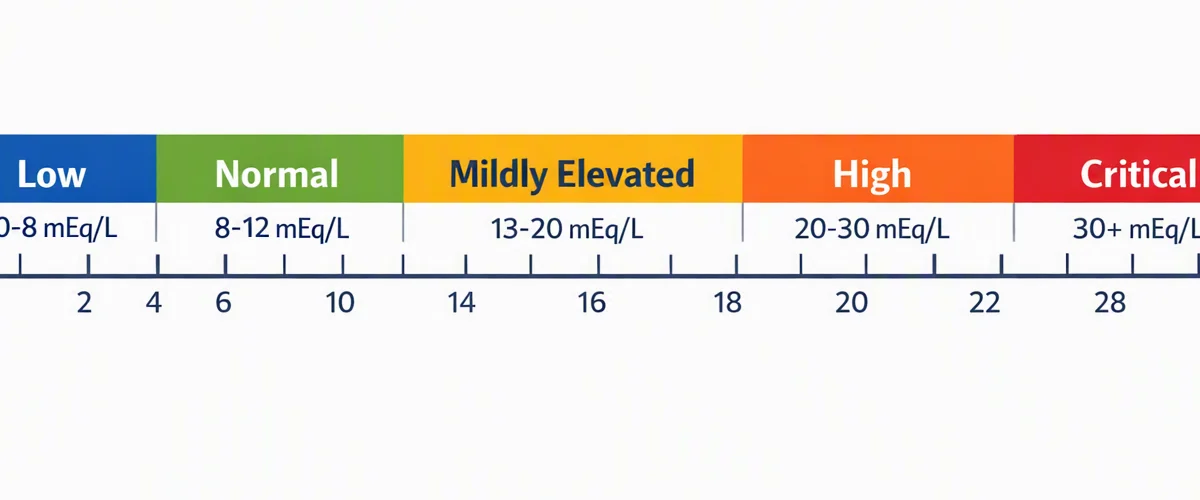
Often, the anion gap shows the relationship between sodium on one side and chloride plus bicarbonate on the other. If chloride and bicarbonate shift in opposite directions, the gap changes. This is why the anion gap serves as a simple window into serum chemistry and overall acid-base balance.
In clinical practice, the value is especially important when looking for systemic acidosis. A widened gap suggests presence of acids or other unmeasured anions, while a normal gap suggests a different pattern of metabolic derangement. The interpretation depends on the reference range used by the laboratory and on the patient’s overall picture.
Why the Anion Gap Matters in Renal Failure
Kidney failure disrupts acid handling, acid excretion, and electrolyte control. As kidney function drops, acids that would normally be eliminated can accumulate, leading to metabolic acidosis. This keeps the anion gap especially valuable in people with kidney failure or worsening renal impairment.
The main reason is uremia. When the kidneys can no longer remove acid load efficiently, uremic toxins and other retained solutes cause anion gap elevation. In advanced chronic kidney disease, this often produces a high anion gap metabolic acidosis. In more acute settings, acute kidney injury may trigger a similar pattern if filtration drops suddenly.
It matters because not every acidosis in renal disease is the same. A high gap often suggests retained acids, while a normal gap may indicate bicarbonate loss or impaired acid secretion without major accumulation of unmeasured acids. Distinguishing between high anion gap metabolic acidosis and normal anion gap metabolic acidosis helps narrow the differential diagnosis and influences treatment decisions.
Overall, the anion gap is a practical way to connect kidney function with the patient’s acid-base disorder. It helps clinicians decide whether the acidosis is primarily due to retention of acid, loss of bicarbonate, or another overlapping process.
How to Work Out the Anion Gap
An anion gap calculator streamlines the calculation formula, but understanding the inputs is essential. Most formulas use serum sodium, serum chloride, and serum bicarbonate. Some formulas also include potassium, though many modern approaches omit it because its contribution is usually small.
The usual formula is:
Anion gap = sodium − (chloride + bicarbonate)
When potassium is part of the formula, the formula becomes a slightly different version that includes potassium to the cation side. Either method may be acceptable depending on local practice and the laboratory’s reporting standards. The key is to use the same approach consistently when interpreting laboratory results.
For example, if the sodium level is 140, chloride level is 102, and bicarbonate level is 18, the anion gap is 20. This is generally above the usual expected range and suggest a elevated gap condition. If the calculator includes serum potassium, the number may rise slightly, but the overall clinical meaning typically stays the same.
The resource is especially useful when paired with the patient’s clinical symptoms and other laboratory tests. A low bicarbonate level by itself signals acidosis risk, but the anion gap indicates whether the acidosis is more likely from excess acids, bicarbonate loss, or a mix. That makes the calculator a valuable medical assessment instrument in renal disease.
Correcting for Albumin in Kidney Disease
Albumin has a significant effect on the measured anion gap because anion gap in chronic kidney disease it is a negatively charged protein. When hypoalbuminemia is present, the anion gap can appear falsely normal or only a bit elevated, even when significant acid accumulation exists. That is why albumin correction is so essential in kidney disease.
In patients with chronic kidney disease or acute kidney injury, low protein levels may decrease the observed gap and obscure important pathology. The corrected anion gap helps adjust for this by estimating what the gap would be if albumin were normal. This gives a more accurate corrected value and improves clinical interpretation.
Albumin correction is especially useful when renal failure coexists with inflammation, malnutrition, or protein loss. In those settings, a patient may have a serious acid load despite a seemingly small gap. Without correction, the clinician may underestimate the severity of the metabolic derangement.
Because albumin is a major contributor to the body’s negative charge, a low albumin level can significantly alter the anion gap. Correcting for albumin does not substitute for the full evaluation, but it enhances the accuracy of the picture and helps prevent missed diagnoses.
High Anion Gap vs Typical Anion Gap Acidosis
Knowing the distinction between increased anion gap metabolic acidosis and normal anion gap metabolic acidosis is important in renal disease. Both are forms of acid-base disorders, but they indicate different mechanisms.
Increased gap acidosis usually means that additional acids are present. In renal disease, this may happen because the kidneys cannot remove acids effectively, leading to accumulation of uremia-related solutes and other retained acids. Other causes include lactic acidosis and ketoacidosis.
Typical gap acidosis, sometimes called hyperchloremic acidosis, generally occurs when bicarbonate is lost or when acid is not excreted properly but without a large buildup of unmeasured acids. In renal impairment, this can appear initially or alongside tubular dysfunction. The chloride level often rises as bicarbonate falls, keeping the gap within the expected range.
Both patterns represent an acid-base disorder, but they imply different cause of acidosis pathways. In clinical practice, that distinction matters because the diagnostic workup and treatment approach may differ. The anion gap is therefore a indicator to the underlying chemistry, not just a marker of severity.
Common Causes of Increased Anion Gap in Renal Failure
Among patients with renal failure, an elevated gap often indicates more than one factor. The leading contributors include chronic kidney disease, acute kidney injury, and retention of uremic toxins. As filtration falls, acids build up, and the anion gap rises.
Uremia is a classic trigger. Retained acids and organic anions are not fully measured on routine labs, so they widen the gap. In advanced kidney disease, this can act as a major driver of metabolic acidosis.
Lactic acidosis is another significant possibility. Poor tissue oxygen delivery, sepsis, shock, or severe illness can all raise lactate. In a patient with renal impairment, lactate clearance may be reduced, making the gap even greater.
Ketoacidosis should also be kept in mind, especially if there is diabetes, poor intake, or prolonged fasting. Ketone accumulation contributes to high anion gap metabolic acidosis and can coexist with renal dysfunction. Because multiple causes can overlap, the observed gap may not reflect a one diagnosis.
Medication effects, toxins, and mixed conditions may also contribute. That is why the anion gap should always be interpreted with the rest of the chemistry panel, symptoms, and the patient’s clinical story.
Understanding Results and Subsequent Clinical Actions
Optimal clinical interpretation begins with the entire clinical picture. Low serum bicarbonate indicates possible acidosis, but the next step is to ask whether the gap is high, within range, or misleading because of low albumin. The result should be reviewed alongside creatinine, blood urea nitrogen, and the degree of kidney function impairment.
An arterial blood gas can offer important detail. It helps assess the pH, respiratory compensation, and whether there is a mixed respiratory problem. This matters because renal disease can coexist with a respiratory disorder, modifying the apparent acid-base pattern.
When the gap is elevated, think about the major causes of high gap acidosis first: retained uremic acids, lactic acidosis, ketoacidosis, toxins, or mixed disease. If the gap is normal but bicarbonate is low, consider bicarbonate loss, tubular dysfunction, or saline-related hyperchloremic acidosis. If albumin is low, apply albumin correction before deciding the result is truly normal.
In practice, a useful approach is to compare the anion gap with the bicarbonate level and the patient’s symptoms. Significant anion gap elevation with low bicarbonate supports a high-gap acidosis. Discordant values may suggest a mixed acid-base disorder and should prompt deeper evaluation. That may include repeat laboratory results, review of exposures, and reassessment of renal status.
Limitations of an Anion Gap Calculator
Although an anion gap calculator is helpful, it has important limits. The first is the reference range. Different laboratories use different analyzers and reporting methods, so a “normal” value in one setting may be abnormal in another. This is a form of laboratory variation that can affect interpretation.
The second limitation is that the calculator estimates, rather than directly records, the amount of unmeasured anions. That means it can miss important information if the patient has several process at once. A mixed acid-base disorder may obscure the expected pattern and cause the gap appear less dramatic than the underlying illness really is.
The delta gap can assist in finding these mixed patterns by comparing the difference in anion gap with the change in bicarbonate. If the numbers do not change in a predictable way, there may be both the high-gap and normal-gap components at the same time. This is particularly important in renal failure, where acidosis from kidney dysfunction may be accompanied by vomiting, diarrhea, lactic acidosis, or ketoacidosis.
Another limitation is that the calculator cannot replace bedside clinical judgment. It does not tell you the full cause, severity, or timing of disease. It is best viewed as a component of a broader medical assessment that includes exam findings, imaging when needed, and serial testing.
Frequently Asked Questions
What is an anion gap calculator used for in renal failure?
An anion gap calculator is used to recognize whether a patient with renal failure has metabolic acidosis, especially high anion gap metabolic acidosis. It helps clinicians differentiate retained acid from other causes of low bicarbonate and assists in the overall evaluation of acid-base balance.
How do you calculate the anion gap from lab values?
The most common calculation uses serum sodium minus the sum of serum chloride and serum bicarbonate. Some formulas also include potassium. The precise method depends on the laboratory and the reference range used, so it is important to read the number in context.
Why should the anion gap be corrected for albumin?
Albumin correction is important because low albumin from hypoalbuminemia can make the gap look falsely normal. In kidney disease, this can mask significant acid accumulation. A corrected anion gap gives a more accurate corrected value for clinical interpretation.
What does a high anion gap mean in kidney failure?
A Check over here high gap in kidney failure often suggests the body is holding onto acids, usually from uremia and other uremic toxins. It might also reflect lactic acidosis, ketoacidosis, or a different overlapping cause. The finding should be evaluated with creatinine, blood urea nitrogen, and an arterial blood gas.
Can renal failure cause normal anion gap metabolic acidosis?
Yes. Renal failure can result in normal anion gap metabolic acidosis, especially when bicarbonate is lost or when tubular acid handling is impaired without a major buildup of unmeasured acids. This is why both high anion gap metabolic acidosis and normal-gap patterns must be evaluated during the assessment of renal impairment.